The Complete Guide to Analog Alarm Clocks
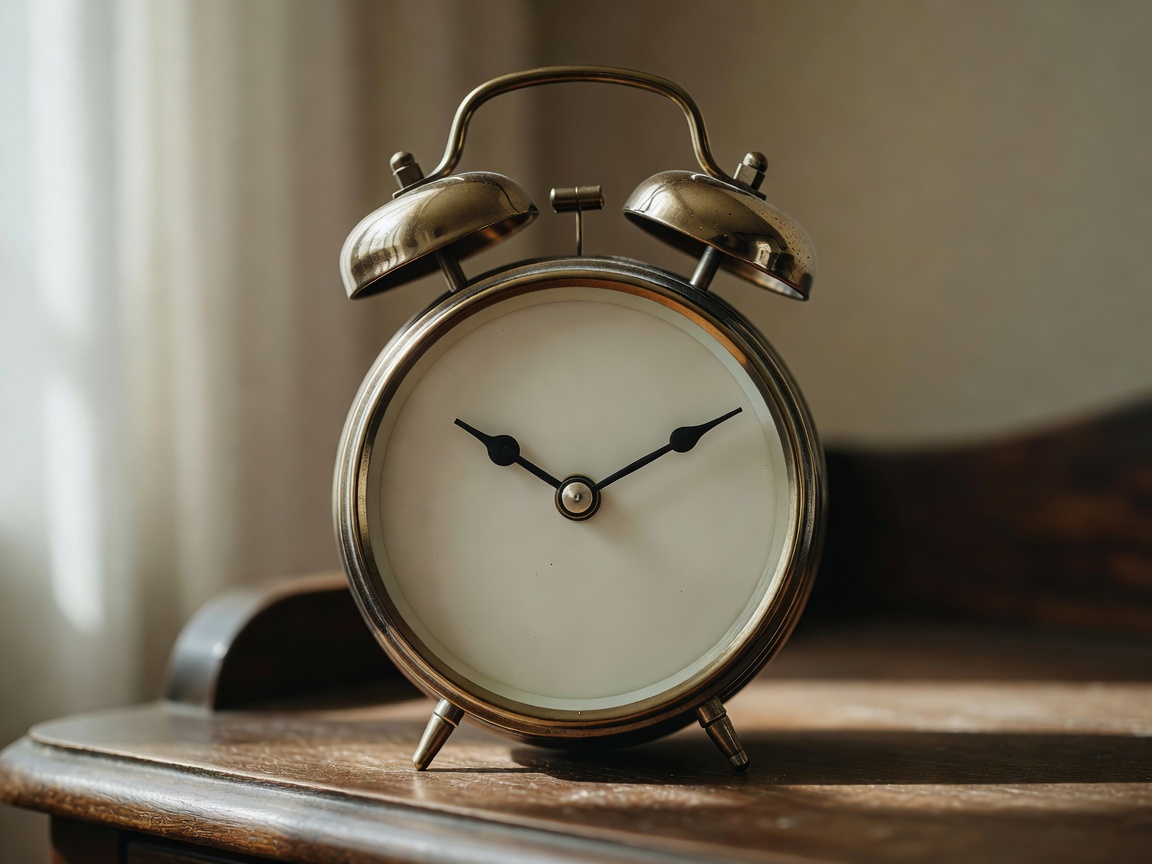
Analog alarm clocks have been a staple of the bedside table for over a century. Despite the rise of digital screens and smartphones, the physical dial, the satisfying turn of a knob, and the unmistakable sound of a physical bell striking continue to hold immense appeal. This guide explores the mechanics, variations, and reasons why going back to basics might be the best decision for your sleep hygiene.
How Analog Clocks Work
At their core, analog clocks rely on a gear train that moves the hour, minute, and second hands around a dial. The alarm mechanism functions via an extra hand (usually distinct in color or shape) that you rotate to the desired wake-up time. As the hour hand aligns with the internal cam of the alarm hand, a physical catch is released. This release either closes an electrical circuit to produce an electronic beep, or releases a wound mainspring to rapidly strike a bell.
One inherent limitation of the analog design is that it operates on a 12-hour cycle. If you set an alarm for 7:00 AM, the alarm mechanism will prime itself to go off at any 7:00. This means you must remember to engage the alarm switch before bed rather than leaving it on continuously, lest it ring during your evening meal.
Quartz vs. Mechanical Movements
When selecting an analog alarm clock, the internal movement is the most crucial factor dictating its maintenance, accuracy, and sound profile.
- Mechanical Movements: These require manual winding, usually via a key or knob on the back of the case. They draw power entirely from a coiled mainspring. Because they contain an escapement mechanism, mechanical clocks produce a distinct, rhythmic ticking sound. While they require daily or weekly winding, they are entirely independent of electricity or batteries.
- Quartz Movements: Quartz clocks utilize a small piece of quartz crystal and a battery. An electronic circuit passes electricity through the crystal, causing it to vibrate at a precise frequency (typically 32,768 times per second). This results in highly accurate timekeeping that requires no winding.
Sweep Seconds vs. Ticking
A common complaint about analog clocks in the bedroom is the auditory distraction of a ticking second hand. If you are sensitive to noise while falling asleep, this is a vital consideration.
Standard quartz clocks step the second hand forward once every second, creating a distinct "tick" as the gears lock into place. To counter this, many modern analog clocks feature a "sweep" movement. In a sweep movement, the gears move continuously, allowing the second hand to glide smoothly around the dial. This eliminates the stepping noise, resulting in a practically silent operation.
Alarm Mechanisms: The Twin Bell
The most iconic analog alarm clock design is the twin bell. Two metal domes sit atop the clock casing, with a small metal hammer positioned between them. When the alarm triggers, the hammer rapidly oscillates, striking the bells to produce a loud, sharp, and sustained ringing.
This style is particularly favored by deep sleepers. The acoustic properties of striking metal cut through background noise and deep sleep phases much more effectively than a standard electronic beep. However, they rarely feature a snooze button; once the physical switch is flipped to turn it off, you are committed to waking up.
Pros and Cons
Advantages
- No blue light emissions to disrupt melatonin production.
- Exceptional durability; many models last for decades.
- Aesthetic appeal that complements traditional and retro interior design.
- Twin bell variants are incredibly effective for heavy sleepers.
Disadvantages
- Cannot distinguish between AM and PM.
- Lack of modern conveniences like weekend skipping or smart home integration.
- Mechanical versions require regular winding.
- Dials can be difficult to read in absolute darkness unless equipped with radium-free luminous paint or a push-button backlight.
Who Should Choose an Analog Clock?
An analog alarm clock is ideal for individuals looking to detox from digital screens in the bedroom. It is suited for heavy sleepers who require the physical acoustic shock of a metal bell, and for those who appreciate the tactile experience of setting their wake-up time manually. If your goal is simplicity, longevity, and a touch of vintage charm, an analog clock remains an unbeatable bedside companion.